
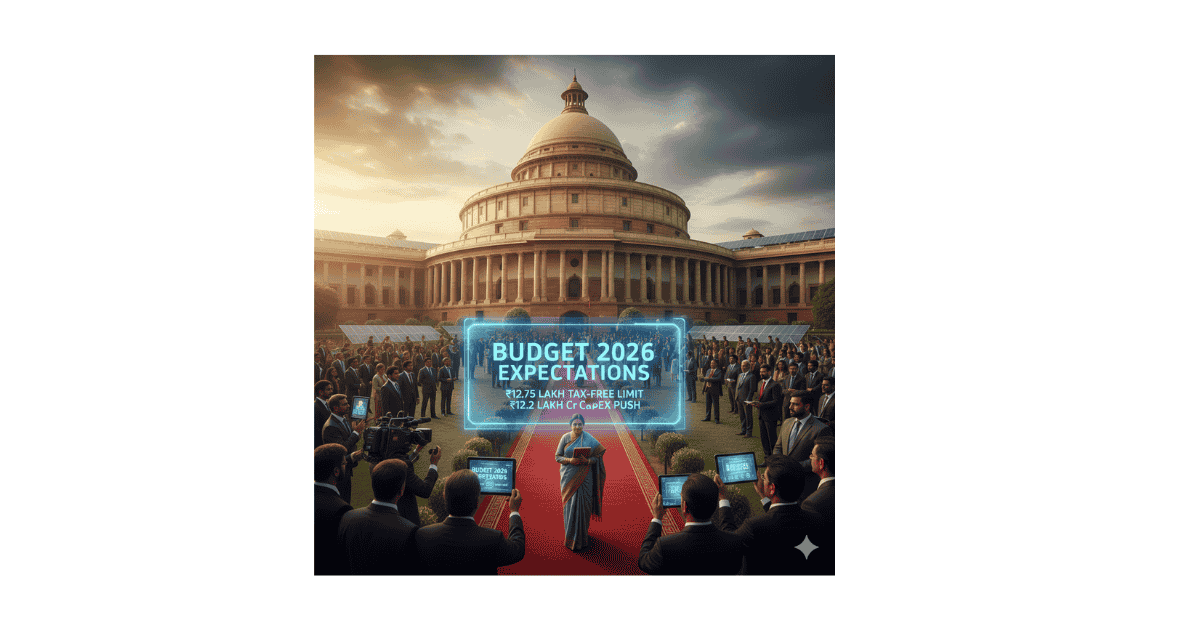


Last updated: January 2026 | PositionalCalls Finance News Desk
India Budget 2026 Expectations: Tax Signals, Fiscal Strategy and Market Focus
India Budget 2026 expectations are emerging as a key focus area for equity markets, policymakers, and taxpayers as the Union Budget approaches. Investors are assessing potential signals around fiscal discipline, capital expenditure priorities, and taxation policy, while awaiting official confirmation from the Ministry of Finance.
Key Headline Details
- The Union Budget for FY2026–27 is scheduled to be presented on February 1, 2026.
- Market participants are monitoring potential changes to income tax structures and standard deductions.
- Capital expenditure allocations and fiscal deficit targets remain central to expectations.
- No official budget proposals have been released as of now.
Market Reaction & Institutional Perspective
Equity markets have shown signs of sectoral rotation in recent sessions, with increased attention on infrastructure, capital goods, defence, and manufacturing stocks. Institutional investors appear cautious, with positioning largely driven by macro stability and policy continuity rather than speculative expectations.
Macro and Sector Impact
| Area | Market Focus |
|---|---|
| Capital Expenditure | Infrastructure, transport, defence, and manufacturing |
| Fiscal Policy | Deficit control and borrowing trajectory |
| Taxation | Potential rationalisation and relief measures |
| Inflation | Balancing growth support with price stability |
Policy and Regulatory Context
Budget expectations are framed by the government’s stated commitment to long-term growth, infrastructure development, and fiscal consolidation. Recent policy statements and macro data releases provide context, but final decisions will be known only at the time of the official Budget speech.
What to Watch Next
- Official Budget speech and documents on February 1, 2026
- Capital expenditure and fiscal deficit targets for FY2026–27
- Clarifications on income tax and indirect tax proposals
Verified Sources
- Ministry of Finance (Government of India)
- Union Budget documents (upon release)
- Public macroeconomic data and policy statements
Disclaimer
This article is based on publicly available information and market expectations as of January 2026. It does not constitute investment advice. Readers should refer to official Budget announcements and government publications for confirmed details.
Shubham tracks Indian equity markets with a focus on banking stocks, insurance companies, and long-term value investing. PositionalCalls was built to give independent investors the same quality of research that institutional desks produce — in plain language, with no brokerage bias and no paid promotions. All analysis is sourced from RBI, SEBI, NSE/BSE filings, and company annual reports.