
Insurance Research · Updated October 2026
The best term insurance plans in India 2026 are ranked here on the newest claim ratios (FY26), solvency ratios at 30 June 2026 and real ₹1 crore premiums, now that GST on individual term plans is 0%. This guide compares five insurers in plain words, with pros, cons, costs and the mistakes that get claims rejected.
Quick answer
No single plan is best for everyone, but on the latest data Axis Max Life Smart Term Plan Plus is our top pick for most buyers. Axis Max Life paid 99.78% of individual death claims in FY26 (99.70% in IRDAI’s FY25 data) and had a 1.98x solvency ratio on 30 June 2026. HDFC Life, Tata AIA and ICICI Prudential are close behind, and LIC suits buyers who put government backing first. ₹1 crore of cover for a healthy 30-year-old non-smoking man costs about ₹780 to ₹870 a month on the four private plans, with 0% GST since 22 September 2025.
Key takeaways
- Claim record (FY26): Axis Max Life 99.78%, HDFC Life 99.72%, Tata AIA 99.45%, ICICI Prudential 99.34%, LIC 97.55% (my calculation from insurer disclosures).
- Financial strength (30 Jun 2026): LIC 2.42x, ICICI Prudential 2.25x, Axis Max Life 1.98x, HDFC Life 1.85x. The minimum is 1.50x.
- Price: ₹782 to ₹870 a month for ₹1 crore on four private plans (age 30, cover till 60). Bajaj Life eTouch II was the cheapest in that data set at ₹738.
- Tax: individual term premiums carry 0% GST from 22 September 2025. Group term cover still attracts 18%.
- Plan updates: HDFC Life’s Click 2 Protect Super was replaced by Click 2 Protect Supreme Plus, and LIC’s older Tech Term (854) by New Tech Term (954).
- Biggest saver: buy early and disclose everything. Waiting from 30 to 35 raises the premium by about 22% to 25%.
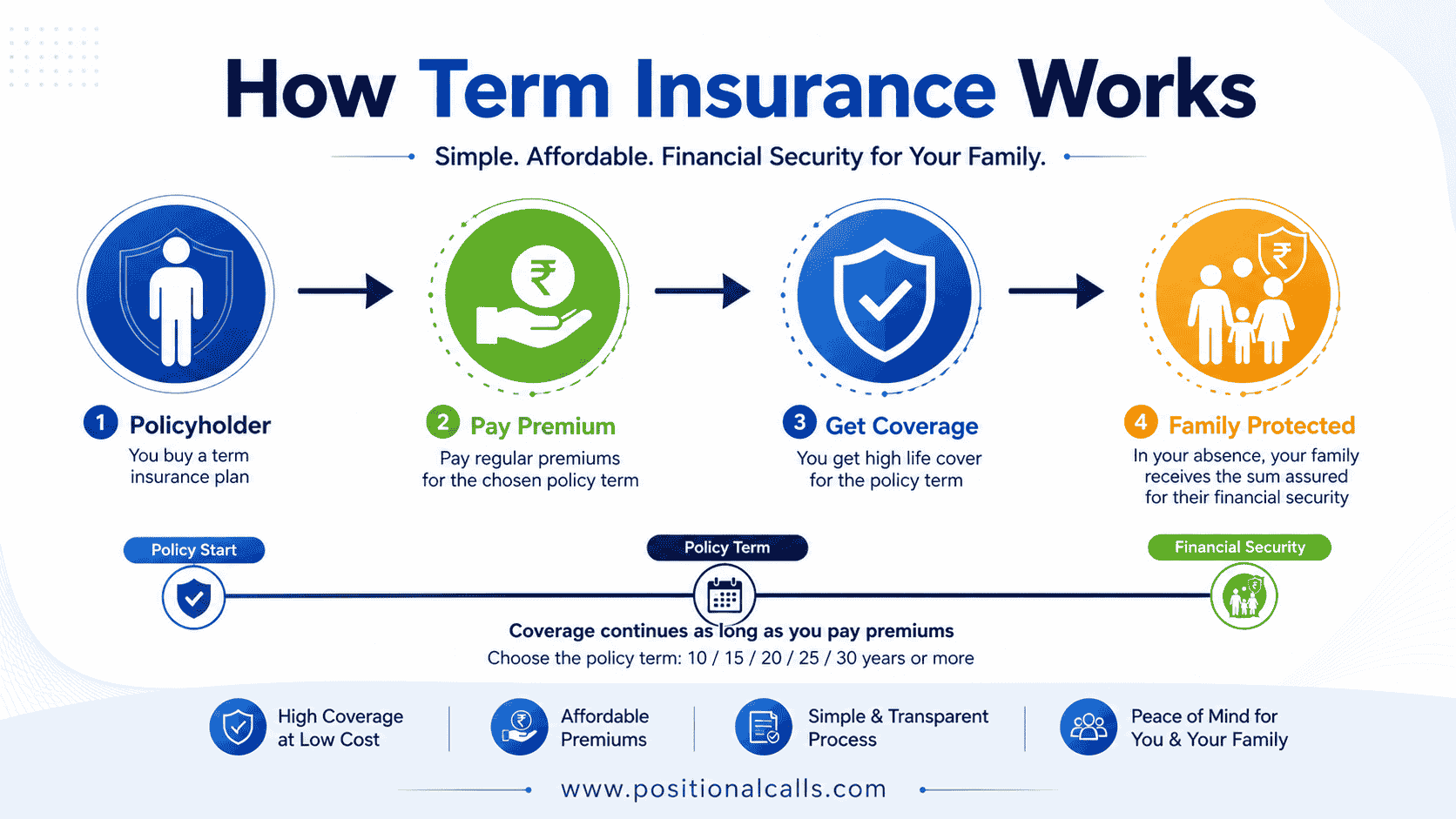
In plain words:Term insurance pays your family a fixed sum if you die during the policy term and pays nothing if you outlive it. The claim settlement ratio (CSR) is the share of death claims an insurer paid. The solvency ratio shows whether an insurer has enough capital to pay claims, and IRDAI requires at least 1.50x. A rider is an optional add-on, such as critical illness cover.
Data note: Claim ratios come from IRDAI’s Handbook on Indian Insurance Statistics 2024-25 (published 3 February 2026), as tabulated by Rakshit Financial Services, and from FY26 insurer disclosures as reported by Cafemutual on 3 July 2026. IRDAI publishes official figures once a year, with a lag. Solvency figures are from company disclosures at 30 June 2026. Premiums are indicative and come from nyvo (May 2026). Always confirm with the insurer’s own calculator.

Which are the best term insurance plans in India in 2026?
The five plans below come from five insurers with the strongest mix of claim record, capital and brand reach. The table uses each insurer’s flagship online plan. Claim ratios count individual death claims by number. The premium column is for a healthy 30-year-old non-smoking man, ₹1 crore cover, cover till age 60, as published by nyvo in May 2026.
| Insurer and plan | CSR FY25 (IRDAI) | CSR FY26 (disclosed) | Solvency | ₹/month (indicative) | Best for |
|---|---|---|---|---|---|
| 1. Axis Max Life: Smart Term Plan Plus | 99.70% | 99.78% | 1.98x (30 Jun 2026) | ₹794 | Best overall |
| 2. HDFC Life: Click 2 Protect Supreme Plus | 99.68% | 99.72% | 1.85x (30 Jun 2026) | ₹870 | Flexibility and life-stage cover |
| 3. Tata AIA: Sampoorna Raksha Promise | 99.41% | 99.45% | About 1.80x (Mar 2025) | ₹782 | Lowest premium of the four private plans |
| 4. ICICI Prudential: iProtect Smart Plus | 99.31% | 99.34% | 2.25x (30 Jun 2026) | ₹835 | Strong capital and payout choice |
| 5. LIC: New Tech Term (Plan 954) / Digi Term | 97.59% | 97.55% | 2.42x (30 Jun 2026) | Get a live quote | Government backing |
FY26 ratios are my calculation (claims settled divided by claims received) from the figures Cafemutual reported. Tata AIA’s solvency is the last figure I could confirm, so check its latest public disclosure. nyvo’s data did not include LIC.
One correction to older guides: LIC’s original Tech Term (plan 854) was replaced by New Tech Term (plan 954), and LIC added Digi Term (plan 876) as a cheaper online option in 2024. HDFC Life has also withdrawn Click 2 Protect Super for new buyers in favour of Click 2 Protect Supreme Plus, as reported by Ditto. Plan names change often, so match the exact plan name on your quote.
What is the claim settlement ratio of top insurers, FY25 and FY26?
The claim settlement ratio is the closest thing India has to an official record of whether an insurer pays. Look at two views. By number counts how many claims were paid. By amount counts how many rupees were paid, so it catches insurers that refuse bigger claims more often.
| Insurer | FY25 by number | FY25 by amount | FY26 by number (my calc.) | FY26 claims rejected |
|---|---|---|---|---|
| Axis Max Life | 99.70% | 97.39% | 99.78% | 0.03% |
| HDFC Life | 99.68% | 97.96% | 99.72% | 0.28% |
| Tata AIA | 99.41% | 98.38% | 99.45% | 0.52% |
| ICICI Prudential | 99.31% | 98.06% | 99.34% | 0.64% |
| LIC | 97.59% | 96.08% | 97.55% | 1.89% |
Three things stand out. First, Axis Max Life leads by number in both years, but its FY25 ratio by amount (97.39%) is the lowest of the four private insurers, so larger claims were settled less often. Tata AIA and ICICI Prudential are strongest by amount. Second, LIC has the lowest ratio, but it handled about 8.5 lakh individual death claims in FY26, roughly 40 times more than any private insurer, and the base is very different. Third, the whole industry paid about 97.8% of 10.19 lakh claims in FY26, according to Cafemutual.
Why a high ratio is not a guarantee
These ratios cover all individual death claims, not only term plans. Your claim will be decided on the policy wording, what you disclosed at purchase and how well the papers are filed. Use the ratio to rule out weak insurers, not to promise a payout.
How do the top 5 term plans compare in detail?
Each card below shows the insurer’s latest record and the plan’s main features, as listed on insurer pages and in nyvo’s plan review. Pros and cons are my reading of that information, not an insurer claim.
Axis Max Life Smart Term Plan Plus
Best overall · Formerly Max Life Insurance
- Seven cover variants, including an Income Protection variant and a Smart Cover variant that pays 150% of the sum assured if death occurs in the first 15 years (as reported by nyvo).
- Special exit value, a built-in terminal illness benefit and optional riders for accidental death, disability, critical illness (up to 64 conditions) and waiver of premium.
- Higher-end option: Smart Secure Plus has increasing cover, joint-life cover and a premium break, per Axis Max Life.
- Discounts for women and salaried buyers are advertised, subject to terms.
- Highest claim ratio by number in FY25 and FY26
- Very low rejection rate in FY26 (0.03%)
- Many variants and riders
- Lowest FY25 ratio by amount among the four private insurers
- Solvency below LIC and ICICI Prudential
- Many variants can confuse first-time buyers
Best for: salaried buyers aged 25 to 40 who want the strongest claim record
HDFC Life Click 2 Protect Supreme Plus
Flexible cover for life events · Launched January 2026
- Three variants: Life, Life Plus (adds accidental death cover) and Life Goal (a decreasing cover option), per HDFC Life.
- Life Stage benefit lets you raise cover at marriage, childbirth or a home purchase, and spouse cover can sit in the same policy (as reported by nyvo).
- Riders include critical illness (60 conditions), waiver of premium, accidental income and education income benefits.
- Premium break and Smart Exit features add flexibility.
- Excellent number-based claim record
- Best life-stage and family features
- Solvency rose to 1.85x after a ₹1,000 crore infusion from HDFC Bank
- Highest premium of the four in nyvo’s data
- Solvency (1.85x) is below Axis Max Life, ICICI Prudential and LIC
- Plan is new, so it has little claim history of its own
Best for: families who expect life changes and want cover to grow with them
Tata AIA Sampoorna Raksha Promise
Lowest price of the four private plans
- Cover can run to age 100, with lump sum, staggered income for up to 30 years or a mix (as reported by nyvo).
- ₹3 lakh is paid within one working day of claim intimation on cover of ₹1 crore or more, after three completed policy years.
- Riders under the Comprehensive Protection Rider cover accidental death, accidental disability and critical illness (40 conditions).
- Cheapest of the four private plans in nyvo’s data
- Best FY25 ratio by amount (98.38%)
- Fast interim payout
- Last confirmed solvency (about 1.80x, Mar 2025) is below peers, though the dates differ
- FY26 rejection rate (0.52%) is above Axis Max Life and HDFC Life
- Fewer critical illness conditions than HDFC or Axis Max Life
Best for: price-conscious buyers who still want a 99%+ claim record
ICICI Prudential iProtect Smart Plus
Strong capital · Choice of payout shape
- Payout choices: lump sum, monthly income for 10 years, a split, or income rising 10% a year, fixed at purchase (as reported by nyvo).
- Cover can be raised 100% on a home loan, 50% on marriage and 25% per child, on regular-pay policies.
- Critical illness is available as a 20-condition or 60-condition package, fixed at purchase.
- Second-highest solvency of the five (2.25x)
- Good FY25 ratio by amount (98.06%)
- Clear life-event cover increases
- Lowest claim ratio by number among the four private insurers
- Higher FY26 rejection rate (0.64%) than HDFC or Axis Max Life
- Payout shape cannot be changed after purchase
Best for: buyers who want strong capital backing and a defined payout plan
LIC New Tech Term (954) and Digi Term (876)
Government-owned · Online and offline options
- New Tech Term (954) is an online-only plan with a minimum sum assured of ₹50 lakh and optional accident and critical illness riders, per Ditto and Basu Nivesh.
- Digi Term (876) is a cheaper online plan with fewer features, and Yuva Term is its offline twin, as reported by Ditto.
- Policies are covered by the Central Government guarantee under Section 37 of the LIC Act, 1956.
- Highest solvency ratio (2.42x) of the five
- Government-owned, with the largest claim volume in India
- Digi Term can be priced competitively
- Lowest claim ratio of the five (97.55% in FY26)
- Highest rejection rate (1.89% in FY26)
- Digi Term lacks critical illness and waiver riders
Best for: buyers who put government ownership above everything else
Which term insurance plan is best for you in 2026?
One plan cannot fit everyone. Match your situation to the picks below, then get quotes for the same cover, term and riders from two or three insurers.
Bajaj Life eTouch II had the lowest premium in nyvo’s data (₹738 a month at age 30), but it sits outside this guide’s five insurers. If price is your top filter, include it in your quotes.
How much does ₹1 crore term insurance cost in 2026?
For a healthy 30-year-old non-smoking man, ₹1 crore of cover till age 60 costs about ₹738 to ₹870 a month, and about ₹628 to ₹740 for a woman, across the five plans nyvo compared in May 2026. There is no GST to add. Here is the monthly range by age on the same basis.
| Age | Man (₹/month) | Woman (₹/month) | What it means |
|---|---|---|---|
| 25 | ₹669 to ₹763 | ₹568 to ₹649 | Lowest entry cost |
| 30 | ₹738 to ₹870 | ₹628 to ₹740 | Still affordable |
| 35 | ₹902 to ₹1,070 | ₹767 to ₹910 | About 22% to 23% above age 30 |
| 40 | ₹1,229 to ₹1,437 | ₹1,044 to ₹1,222 | Noticeable jump |
| 45 | ₹1,761 to ₹2,053 | ₹1,497 to ₹1,745 | About 2.6 to 2.7 times the age 25 price (my calculation) |
Source: nyvo premium data, May 2026, for a salaried graduate earning ₹10 lakh, non-smoker, regular pay. Ranges span five plans. A woman pays about 15% less than a man of the same age.
Axis Max Life’s calculator shows a 30-year-old paying ₹10,294 a year as a non-smoker and ₹18,015 as a smoker for ₹1 crore, about 75% more. Its own illustrations show a ₹1 crore plan for a 30-year-old at ₹9,100 a year over 30 years, against ₹17,700 with return of premium, nearly double (my calculation: 17,700 divided by 9,100 is about 1.95). nyvo advises skipping return-of-premium variants because the refund loses value to inflation.
The cost of waiting
On the median plan, a man who buys at 30 pays ₹9,528 a year. At 35 it is ₹11,880 a year, about 25% more, locked in for the whole term (nyvo data). Every year of delay costs money, and a health issue can make cover costlier or harder to get.
Is there GST on term insurance, and what are the tax benefits?
Individual term insurance has attracted 0% GST since 22 September 2025, following the 56th GST Council meeting. It applies to new policies and to renewals paid on or after that date. Group term insurance and group credit life still attract 18%. The saving can be less than the full 18% because insurers also repriced, and some experts expected premiums to fall 10% to 15%, as reported by Outlook Money.
- Premium deduction: under the old tax regime, term premiums count toward the ₹1.5 lakh limit under Section 80C of the Income Tax Act, 1961 (Section 123 of the new Income Tax Act, 2025), as Axis Max Life describes it. The new regime does not allow this deduction.
- Payout: the death benefit is generally exempt under Section 10(10D) (Section 11 of the new Act), subject to conditions.
- Claims: GST has no effect on the sum your family receives.
Tax rules change, so check with a tax adviser for your own case.
How do you choose the right term plan? 7 checks
- Claim settlement ratio above 98%: read it by number and by amount, for the same year. Treat a low figure as a reason to look harder.
- Solvency at or above 1.50x: IRDAI’s minimum. All five insurers here clear it, and the range is 1.80x to 2.42x.
- Riders that fit your life: critical illness, accidental death and waiver of premium matter most. Check the number of conditions covered and any survival or waiting conditions.
- Premium fixed for the term: a regular-pay term plan locks your price at purchase. Compare quotes for the same cover, term and payment mode.
- Payout structure: a lump sum is simple, while monthly income suits families who may not manage a large sum. A mix often works best.
- Cover till 60 or more: match the term to your last major liability, for example the end of a home loan or your children’s independence.
- Honest disclosure: health, smoking, income and existing cover must all be accurate. This matters more than any ratio.
How much term insurance cover do you need?
A common rule of thumb is 10 to 20 times your annual income. A needs-based method is more reliable. Add your loans, plus 10 to 15 years of household expenses, plus goals such as children’s education, then subtract savings, existing cover and a working spouse’s income.
Example from nyvo: household expenses of ₹8 lakh a year for 15 years (₹1.2 crore), a ₹40 lakh home loan and ₹30 lakh for education, less ₹10 lakh of liquid savings, comes to ₹1.8 crore. ₹1 crore is a common starting point, not a universal answer. Revisit the number after marriage, a child, a new loan or a big pay rise.
How to buy term insurance online in India
- Work out your cover and term: use the needs-based method above, and pick a term that runs past your last big liability.
- Get quotes for the same inputs: use each insurer’s own calculator, with the same cover, term, payment mode and smoker status. Compare two or three insurers.
- Choose riders and payout: add critical illness, accidental death and waiver of premium if they fit your budget, and decide on a lump sum, monthly income or a mix.
- Fill the proposal honestly: disclose health, habits, income and existing policies. Expect a medical test for larger covers.
- Pay and review the free-look period: after you receive the policy, read the document within the free-look window, usually 15 to 30 days, and cancel if the terms differ from what you expected.
- Tell your family: share the policy number, insurer and nominee details, and store a copy where your family can find it.
Buy from the insurer’s own website or an IRDAI-licensed seller, and be wary of unsolicited calls pushing savings plans as term cover. IRDAI’s chairperson said on 30 June 2026 that fresh guidelines will target miss-selling by banks.
What are the 5 costly term insurance mistakes?
What is new in term insurance in 2026?
Several changes matter for buyers this year.
Analyst’s note: how to read these numbers
- The five insurers are closer than the headlines suggest. The four private insurers sit between 99.3% and 99.8% by number, so the choice should turn on riders, payout and price.
- Read the amount ratio too. A high ratio by number can hide bigger claims being declined, as Axis Max Life’s FY25 amount ratio shows.
- Do not over-read LIC’s gap. LIC deals with far more claims and mixes many policy types, so its ratio is not a clean term-plan score. It is still the lowest of the five.
- Prices are indicative. Premium depends on income, occupation, term and even location, and quotes can differ from published tables.
- Decide before you are pushed. Write your cover, term and rider list first, then compare quotes against it.
What is the bottom line on the best term insurance plan in 2026?
Bottom line
Known: Axis Max Life leads on claim record by number, LIC leads on solvency, Tata AIA is the cheapest of the four private plans, and GST on individual term plans is 0%.
Not known yet: Your own premium, your medical outcome, IRDAI’s official FY26 ratios and the exact date Bima Sugam goes fully live.
Your move: Fix your cover and term, compare quotes for the same inputs, disclose everything and buy early. This is education, not advice.
Get free insurance and market updates on WhatsApp
Join the PositionalCalls channel for short, plain-language updates on insurance, IPOs and personal finance.
Best term insurance plans in India 2026: frequently asked questions
Which is the best term insurance plan in India in 2026?
There is no single best plan, but Axis Max Life Smart Term Plan Plus is our top pick for most buyers. Axis Max Life paid 99.78% of individual death claims in FY26 and had a 1.98x solvency ratio on 30 June 2026. HDFC Life, Tata AIA, ICICI Prudential and LIC suit different priorities, so compare quotes for the same cover and term.
How much does ₹1 crore term insurance cost?
For a healthy 30-year-old non-smoking man, ₹1 crore of cover till age 60 costs about ₹738 to ₹870 a month across five major plans, and about ₹628 to ₹740 for a woman, according to nyvo’s May 2026 data. There is no GST to add. Your own quote depends on age, health, term and income.
Which insurer has the highest claim settlement ratio among the top five?
Among Axis Max Life, HDFC Life, Tata AIA, ICICI Prudential and LIC, Axis Max Life had the highest ratio by number in IRDAI’s FY25 data (99.70%) and in FY26 disclosures (about 99.78%). LIC had the lowest at 97.59% in FY25. Ratios change every year, so always check the period.
Is LIC still a good choice for term insurance?
LIC is a sound choice if government ownership matters most. It had the highest solvency ratio of the five (2.42x at 30 June 2026), but the lowest claim ratio (97.59% in FY25). It also handles about 40 times more claims than any private insurer. Its newer plans are New Tech Term (954) and Digi Term (876).
Is there GST on term insurance in 2026?
No GST applies to individual term insurance. The rate has been 0% since 22 September 2025 for new policies and renewals. Group term insurance and group credit life still attract 18% GST. GST has no effect on the sum your family receives.
How much term insurance cover should I take?
A common rule of thumb is 10 to 20 times your annual income, but a needs-based method is better. Add your loans, 10 to 15 years of household expenses and goals such as education, then subtract savings, existing cover and a working spouse’s income. Review it after any major life event.
What is the claim settlement ratio and why does it matter?
The claim settlement ratio is the share of individual death claims an insurer paid in a year. IRDAI publishes it by number and by amount. It helps you rule out weak insurers, but it does not guarantee your claim, because the policy wording and your disclosures decide each case.
Can I buy term insurance online safely?
Yes. Buy from the insurer’s own website or an IRDAI-licensed seller, and use official calculators. Compare quotes for the same cover, term and payment mode. Be careful with unsolicited calls pushing savings plans as term insurance.
Which riders should I add to a term plan?
The most useful riders are critical illness, accidental death and waiver of premium. Critical illness pays on diagnosis of a listed illness, accidental death adds a sum on accidents, and waiver of premium keeps the policy running if you cannot pay. Check the conditions covered and any survival or waiting rules.
Is it too late to buy term insurance at 40?
It is not too late, but it costs more. For ₹1 crore of cover till 60, a man pays about ₹1,229 to ₹1,437 a month at 40, against ₹738 to ₹870 at 30, in nyvo’s data. Buy as soon as you can, because health issues can raise the price or limit cover later.
Usually not. A return-of-premium variant costs nearly double in Axis Max Life’s illustration (₹17,700 a year against ₹9,100 for ₹1 crore at age 30), and the refund loses value to inflation. Many advisers suggest buying a plain term plan and investing the difference.
Under the old tax regime, term premiums count toward the ₹1.5 lakh Section 80C limit (Section 123 of the new Income Tax Act, 2025), and the death benefit is generally exempt under Section 10(10D). The new regime does not allow the 80C deduction. Check your own case with a tax adviser.
About the author: Shubham Chaudhary. Founder of PositionalCalls, writing on Indian markets and personal finance. This guide is built from IRDAI data, insurer disclosures and published premium data, and I do not take commissions from any insurer. Connect on LinkedIn.
What are the sources behind this guide?
Official and primary pages are linked. Other sources are named after them. All figures are as of 24 October 2026 unless stated.
Official and primary sources
- IRDAI, Handbook on Indian Insurance Statistics 2024-25, Table 15 (published 3 February 2026)
- LIC Q1 FY27 press release (solvency 2.42 at 30 June 2026)
- HDFC Life Q1 FY27 press release
- ICRA rating rationale on Axis Max Life (solvency 1.98x at 30 June 2026)
- Axis Max Life term insurance plans page (plan features, illustrations, 0% GST, tax notes)
- HDFC Life Click 2 Protect Supreme Plus brochure
Other reference sources
- Rakshit Financial Services, claim settlement ratio tables from IRDAI FY2024-25 data
- Cafemutual, FY26 life insurer claim settlement and rejection ratios (3 July 2026)
- nyvo, best ₹1 crore term plans and premium data (updated 20 October 2026)
- Ditto, HDFC Life Click 2 Protect Supreme Plus review, and Ditto’s LIC term plan guides
- Business Standard and Tata AIA on 0% GST for individual term insurance
- NewsBytes, reporting Moneycontrol on the Bima Sugam timeline (27 September 2026)
- Outlook Money on GST and premiums; Business Standard on the 100% FDI notification; Basu Nivesh on LIC plans; PolicyX on Tata AIA solvency
Editorial disclosure: PositionalCalls is an independent Indian stock market and personal finance research site founded by Shubham Chaudhary. We are not SEBI registered and are not an IRDAI-registered insurance intermediary. This article is for education only and is not insurance, investment or tax advice. Premiums and ratios are indicative, change often and vary by person. Research for this article was done with AI assistance, and the article was reviewed by the editor before publication. Read the policy brochure and consult a licensed insurance adviser before you buy.

Shubham Chaudhary is the founder of PositionalCalls, an independent Indian stock market research website. He writes company fundamentals, quarterly results analysis, IPO analysis and sector research for NSE and BSE listed companies, with a focus on banking stocks, insurance and long-term value investing. Every article is built from primary sources such as RBI, SEBI, NSE and BSE filings and company annual reports, and states its risks plainly in simple language for retail investors.
Coverage areas Our research standards- Numbers checked against NSE, BSE and SEBI filings
- Risks and limits stated in every article
- No paid promotions or broker tie-ups
- Articles updated when new filings arrive